

Which packaging material should we use?
We usually answer with another one.
What are you packing?
That matters more than the material name.
A hot takeaway meal, a tray of bakery products, fresh vegetables and a dry snack may all need completely different packaging. The wrong choice often looks fine on day one. Problems show up later: film tears, trays soften, paper sticks, cartons collapse, or customers complain about leaks.
We have seen buyers spend too much time comparing unit prices and too little time checking how the packaging behaves in real use.
That is where most trouble starts.
What Does Packaging Material Really Mean?
In food packaging, the term covers a wide group of products:
aluminium foil
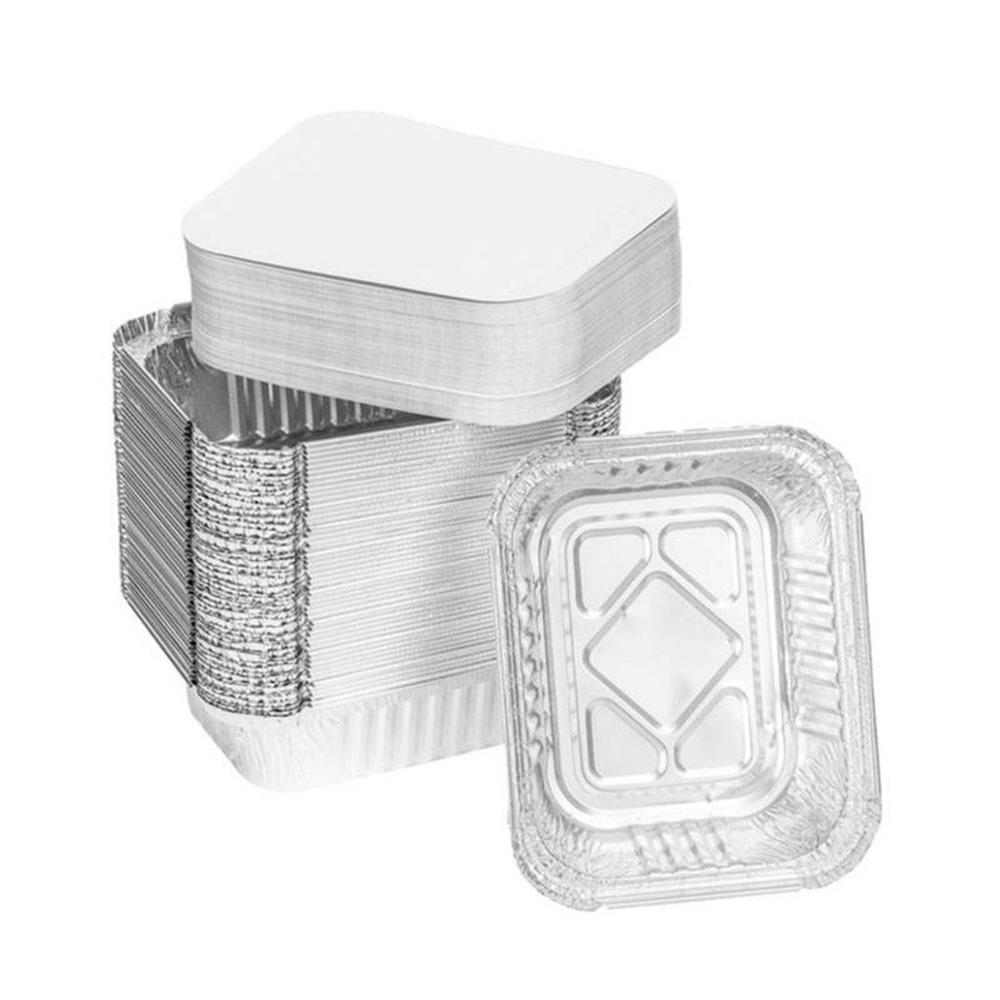
aluminium containers
baking paper
PE cling film
disposable food boxes
bagasse containers
bamboo products
paper food packaging
Grandsong currently supplies several of these categories for retail, household, catering and food-service use.
On paper, they all do the same job: protect food.
In practice, they work very differently.
A buyer should think about four things before discussing price:
food type, temperature, storage time and transport conditions.
Miss one of those and even a good material can become the wrong material.
A Supermarket Has Different Problems From a Restaurant
Take a supermarket.
Fresh produce needs visibility and quick wrapping. Bakery counters care about clean release and heat resistance. Prepared-food sections worry more about grease, lid fit and stacking.
One material cannot solve all three jobs well.
Fresh Food Wrapping
PE cling film works well when staff need speed.
Grandsong lists LLDPE cling film in roughly 9–12 micron options, with different widths available.
Thickness matters, but it is not the whole story.
We would also check:
Does the roll unwind smoothly?
Does the film cling after refrigeration?
Does it tear too easily at the cutter?
Can staff wrap irregular trays without fighting the film?
These small details affect daily use far more than a nice specification sheet.
Bakeries Care About Release, Not Just Heat
Buyers often ask one question about baking paper:
“How many degrees can it handle?”
That is useful, but incomplete.
Grandsong lists silicone-coated baking paper at around 36–40 gsm and heat resistance up to about 230°C.
Good starting point.
Still, a bakery should test the paper with its own products.
Butter-heavy pastry behaves differently from bread. Sugar changes release. Cheese creates another problem. High-fat recipes can expose weak coating quickly.
We have seen baking paper pass a simple oven test and still cause problems during actual production because sheets curled, edges lifted, or food stuck after longer baking cycles.
That is why sample testing matters.
Takeaway Packaging Gets Abused
A takeaway box has a rough life.
Hot food goes in.
Steam builds.
The box sits inside a bag.
A courier turns a corner.
Another meal gets stacked on top.
Then the customer opens it 30 or 40 minutes later.
A box that looked perfect when empty may fail badly under those conditions.
When we test disposable food containers, we do not just check appearance.
We fill them.
Preferably with the messiest food on the menu.
Oil. Sauce. Heat.
Then we close the lid, stack several boxes, leave them for the normal delivery time and tilt the bag.
Simple test.
Very revealing.
Aluminium Foil Is Not Just “Foil”
This is another common buying mistake.
A buyer sends:
“Please quote aluminium foil.”
That is not enough information.
Grandsong lists foil thicknesses from around 9 to 30 microns.
That range covers very different applications.
A light household roll may work perfectly at one thickness. A catering kitchen that wraps large trays or sharp-edged food may need something stronger.
Going thicker does not always make sense either.
You pay for material you may not need.
The better question is:
What is the thinnest specification that still works reliably for this job?
That question usually leads to a better cost-performance balance.
Start With the Food, Not the Catalogue
When buyers ask us how to choose food packaging materials, we normally break the job into a few basic questions.
What exactly goes inside?
Be specific.
Not “snacks.”
Say “freeze-dried strawberry slices.”
Not “hot food.”
Say “fried chicken with oil and steam.”
Those details help the supplier understand what the packaging will actually face.
How long will the food stay inside?
Thirty minutes?
Three days?
Six months?
A takeaway meal needs short-term protection.
A retail food product may need much stronger moisture or oxygen control.
Same word: packaging.
Completely different requirement.
What temperatures will the package see?
A package may go through several stages:
hot filling → cooling → refrigeration → reheating
That temperature journey matters.
Tell the supplier the full process.
Do not just say “heat resistant.”
Barrier Performance: Buy What You Need
Packaging buyers often hear technical terms such as moisture barrier and oxygen barrier.
The concept is simpler than it sounds.
If a dry food absorbs moisture, it may lose crispness.
If a fatty food meets too much oxygen, flavor can change.
If grease reaches paper fibers, the box may weaken.
So ask:
What is most likely to damage my product?
Moisture?
Oxygen?
Oil?
Light?
Aroma loss?
Once you identify the main risk, material selection becomes much easier.
And cheaper.
Many buyers over-specify packaging because nobody stopped to ask what level of protection the product really needed.
“Food Grade” Is Not the End of the Conversation
We see this phrase everywhere.
Food grade.
Useful? Yes.
Enough? No.
A buyer still needs to know the intended use.
Will the material touch oily food?
Acidic food?
Will it enter an oven?
A freezer?
Will the consumer microwave it?
Will the package contact food for minutes or months?
These details matter when reviewing food-contact compliance for the target market.
For U.S. projects, buyers should check relevant FDA food-contact requirements.
For EU projects, they should review applicable food-contact rules and request documents for the exact product being purchased.
Do not collect certificates just because the PDF has a logo on it.
Check whether the document actually covers your SKU and application.
A Quick Material Comparison
| Material | Where It Usually Works Well | What We Would Check |
|---|---|---|
| Aluminium foil | Catering, baking, wrapping | Thickness, width, roll length |
| Aluminium tray | Hot meals, prepared food | Rigidity, rim, lid fit |
| Baking paper | Bakery, oven use | GSM, coating, release |
| PE cling film | Fresh-food wrapping | Stretch, cling, winding |
| Bagasse container | Takeaway food | Oil resistance, lid strength |
| Bamboo products | Catering, serving | Surface quality, strength |
There is no winner.
Only better or worse matches.
Parameters Buyers Can Use as a Starting Point
Grandsong currently lists several useful ranges:
aluminium foil: about 9–30 μm
baking paper: about 36–40 gsm
baking paper heat resistance: up to about 230°C
PE cling film: about 9–12 μm
These numbers help start an RFQ.
They should not replace testing.
We would still ask for samples before approving a large order.
Samples Should Be Used, Not Admired
This sounds obvious.
It is not.
Some buyers receive samples, check the appearance, measure one piece and move straight to pricing.
We prefer to stress the sample.
For cling film, stretch it.
For baking paper, bake with it.
For foil, wrap sharp and smooth products.
For food containers, fill them with hot food and stack them.
A sample sitting on a conference table proves almost nothing.
Common Buying Mistakes
Asking Only for the Lowest Price
“Please send best price.”
Suppliers see this every day.
It gives them very little useful information.
A better RFQ tells them:
product type
food application
temperature
size
expected quantity
market
branding requirement
Better input usually gives you a better quotation.
Copying a Competitor
You can copy the look.
You cannot see the problems behind it.
Maybe their package leaks.
Maybe they accept a higher rejection rate.
Maybe they buy at a volume you cannot match.
Use competitors for reference, not as your engineering specification.
Chasing “Eco-Friendly” Labels First
Demand for biodegradable food packaging keeps growing.
That does not mean every biodegradable option fits every food.
If a box softens during delivery or causes more food waste, the sustainability story gets weaker.
We prefer this order:
protect the food first, reduce unnecessary material second, then improve recyclability or compostability where the local system supports it.
Forgetting Freight
A cheaper unit can cost more after shipping.
Large cartons waste container space.
Poor nesting wastes even more.
Ask for carton dimensions and loading quantity before you compare suppliers.
Landed cost matters more than factory price.
What We Would Ask a Food Packaging Supplier
Before approving a food packaging materials supplier, we would ask:
Can you keep the same thickness and dimensions across repeat orders?
Can you provide OEM cartons and labels?
Which specification has the biggest effect on price?
What tolerance can you guarantee?
Which documents cover this exact item?
Can we test samples before production?
Those questions tell you far more than “Are you a factory?”
FAQ
What is the best packaging material for food?
There is no single best choice. It depends on food type, temperature, moisture, oil content, storage period and transport conditions.
What should buyers check before ordering food packaging?
Check material, thickness or GSM, dimensions, food-contact documentation, heat performance, mechanical strength and packing method.
What aluminium foil thickness should I use?
Grandsong lists options from about 9 to 30 microns. The right thickness depends on how the foil will be used. Test before fixing the final specification.
Is biodegradable packaging always better?
No. It still needs to protect the product, survive transport and match local recycling or composting conditions.
How can I compare two packaging suppliers?
Use the same RFQ. Compare material, dimensions, tolerances, carton packing, compliance documents, sample performance, lead time and landed cost.
Conclusion
Packaging Material purchasing becomes much easier when you stop looking for the “best material” and start looking for the best match.
A bakery has one set of problems.
A supermarket has another.
A takeaway brand has another again.
Start with the food.
Then check temperature, storage time, barrier needs, strength and transport.
After that, talk about price.
That order may feel slower at the beginning.
In our experience, it saves a lot of trouble later.
