

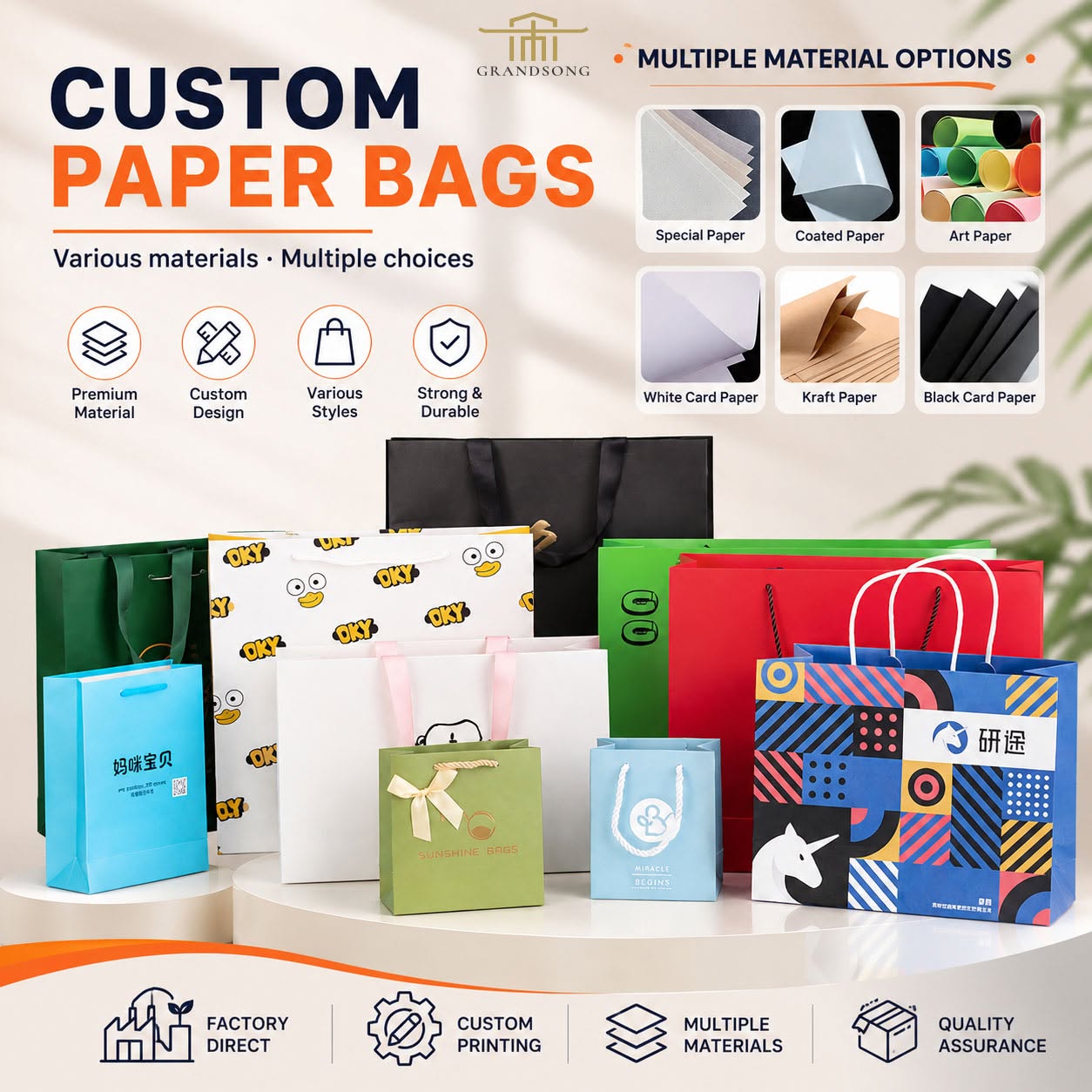
Ever notice how some paper bags just feel more solid and trustworthy than others? In bulk production, it's not just about how they look—it's about whether they'll actually hold up when it counts. Whether you're packaging retail products or designing custom bags, focusing on the right details makes all the difference.
This guide breaks down the key things to watch for, from material choices to final checks. By the end, you'll have a clear sense of what separates good paper bags from the ones that fall apart after a few uses.
Picking the Right Paper
The paper itself is the backbone of any bag. Not every type performs the same, so matching the material to your needs is crucial for both strength and appearance.
The main options are kraft paper, recycled paper, and virgin paper. Each has its strengths:
Kraft paper stands out for its toughness and that classic natural look. It's usually unbleached, which makes it one of the more environmentally friendly choices since it breaks down easily.
Recycled paper appeals to eco-conscious brands because it's made from post-consumer waste. Just keep in mind it can sometimes be a bit less sturdy than virgin options, depending on how it was processed.
Virgin paper, made from fresh pulp, tends to be the strongest and most durable. It's a smart pick when your bags will be carrying heavier loads or getting rough treatment.
The best choice usually comes down to balancing durability with your sustainability goals. Heavy items? Go virgin. Strong green focus? Kraft or recycled often does the job nicely.
Getting the Dimensions Right
Size and design specs directly affect how much a bag can hold and how well it holds up.
Common sizes run from small (#1) for jewelry and tiny items up to larger (#3) grocery-style bags for bulkier goods. Pay close attention to gusset width—that's the expandable side or bottom section. A wider gusset gives more room without sacrificing stability.
Handles matter too. Whether they're twisted paper, cotton, or another material, they need to match the bag's overall weight capacity. Getting these measurements spot-on prevents bags that are either too weak or awkwardly shaped for your products. Many suppliers, like PackCCP, specialize in customizing these details precisely.
Surface Feel and Long-Term Durability
How the paper feels in your hand can make or break the customer experience. Visible flaws or rough spots quickly cheapen the whole product.
Smoothness generally signals higher quality and gives a polished look, but overly smooth paper can sometimes tear more easily.
Finish choices like matte (for a natural vibe) or glossy (for premium shine) also influence both style and strength.
Tensile strength is the technical way of measuring how much pulling force the paper can take before it gives way—critical for bags that need to carry real weight.
Printing and Branding That Holds Up
Great printing turns a simple bag into a walking billboard for your brand. Poor printing, on the other hand, can make even a strong bag look cheap.
Look for inks that won't fade easily—water-based ones are popular for eco-friendly lines, while oil-based can offer better longevity. The print itself should be sharp, with no smudging or bleeding, especially on logos and text. Think about how the design wraps around the bag too; it needs to work with handles and gussets rather than fighting them.
When done well, strong printing reinforces your brand image every time someone carries your bag.
Strong Seams and Smart Reinforcements
A bag is only as good as its weakest seam. This is where many failures happen, so don't overlook it.
Side seams should use solid gluing or double stitching for heavy-duty applications.
Bottom reinforcements (extra paper layers or smart folding) help prevent blowouts on larger bags.
Handle attachments often need extra patching, especially for cotton or heavier-duty handles.
Taking time to inspect these areas during production can save a lot of headaches later.
Testing Load Capacity and Real-World Strength
Before committing to a huge order, proper testing is non-negotiable.
Fill sample bags with your typical loads and see how they handle it. Do tensile and burst tests to simulate stress. Also run durability checks that mimic real conditions—moisture exposure, rough handling, whatever your bags will actually face. Random spot-checking throughout the run helps maintain consistent quality.
Final Quality Control and Shipping Prep
The last step before bags leave the factory is a thorough inspection. Check for:
Consistent color and clean printing
No wrinkles, tears, or creases
Accurate sizing across the batch
Properly attached handles and seams
Packaging for shipment matters too—good protection against moisture and crushing ensures your bags arrive looking as good as they did at the factory.
Wrapping It Up
Quality paper bags come down to smart material choices, precise specs, solid construction, and careful testing. When you get these elements right, your bags not only perform well but also strengthen your brand.
If you're looking for reliable, sustainable options tailored to your needs, Xiamen GrandSong specializes in high-quality eco-friendly paper bags. Reach out to them today to discuss your next bulk order and get packaging that truly delivers.
