

Introduction
Paper bags have become one of the most widely used packaging solutions across retail, food service, and e-commerce industries. As global demand shifts toward sustainability, brands actively replace plastic packaging with paper bags, especially eco friendly paper bags that align with environmental regulations and consumer expectations.
Today’s paper bag is no longer a simple carrier. It represents brand identity, product protection, and environmental responsibility at the same time. Businesses now invest in custom paper bags not only for functionality but also for marketing impact, customer experience, and long-term brand positioning.
This article explains paper bags from a technical and commercial perspective. It covers usage scenarios, structural advantages, material selection, performance parameters, and common mistakes buyers should avoid. Whether you are a retailer, wholesaler, or sourcing manager looking for a reliable paper bag supplier, this guide will help you make informed decisions.
What Are Paper Bags?
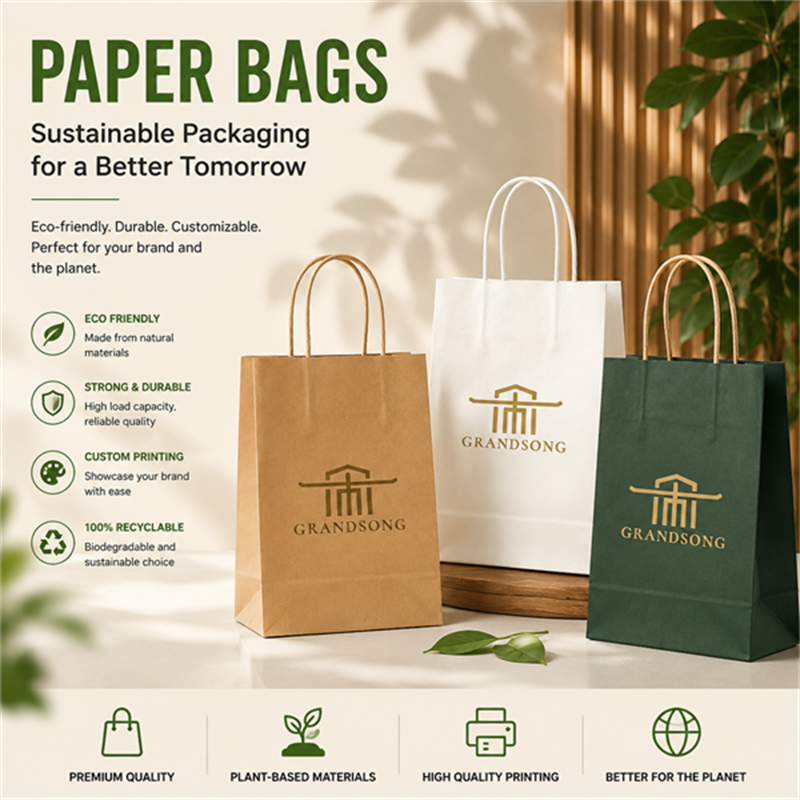
Paper bags are packaging products made from kraft paper, white paper, or recycled paper materials. Manufacturers design them in different shapes, thickness levels, and handle structures to support various load capacities and industries.
Modern production technology allows paper bags to achieve:
High tensile strength
Moisture resistance (with coating or lamination)
Custom printing for branding
Recyclability and biodegradability
Compared with traditional plastic bags, paper bags offer a more sustainable lifecycle and a stronger brand perception.
Why Paper Bags Matter in Modern Packaging
Shift from Plastic to Sustainable Packaging
Global regulations and consumer awareness push companies to reduce plastic usage. Many countries now restrict single-use plastics, making eco friendly paper bags a standard requirement rather than an optional choice.
Retailers choose paper bags because they:
Improve brand image
Meet environmental compliance
Increase customer satisfaction
Support sustainable supply chain goals
Branding Value of Custom Paper Bags
Unlike plain plastic bags, custom paper bags function as mobile advertising tools. Every customer carrying a printed paper bag becomes a brand ambassador.
Brands typically print:
Logos
Slogans
QR codes
Seasonal designs
This transforms packaging into a marketing channel with long-term visibility.
Key Application Scenarios of Paper Bags
Retail Industry
Retail stores use paper bags for clothing, accessories, cosmetics, and luxury goods. The bag becomes part of the shopping experience and influences customer perception of product value.
Food and Beverage Industry
Restaurants, bakeries, and takeaway services rely heavily on grease-resistant and food-grade paper bags. These bags ensure hygiene while maintaining structural integrity.
E-commerce Packaging
Online sellers use paper bags as secondary packaging or lightweight shipping solutions. They reduce shipping weight while maintaining product protection.
Gift Packaging
Gift shops prefer laminated or decorative custom paper bags for premium presentation.
Pain Points in Paper Bag Usage
Understanding customer pain points helps buyers choose the right supplier and product specification.
1. Insufficient Load Capacity
Many low-quality paper bags tear under weight. This often results from:
Thin paper material
Poor handle bonding
Weak bottom structure
2. Moisture Sensitivity
Paper naturally absorbs moisture. Without coating or treatment, bags may lose strength in humid environments.
3. Printing Quality Issues
Poor ink adhesion leads to fading, smudging, or inconsistent branding results.
4. Cost vs Quality Balance
Some buyers focus only on price and ignore durability or brand presentation, which affects customer experience.
5. Supply Chain Inconsistency
Unstable suppliers may cause delays, inconsistent sizing, or quality fluctuations.
Technical Advantages of Modern Paper Bags
Modern manufacturing has significantly improved the performance of paper bags. A professional paper bag supplier uses advanced machinery and quality control systems to ensure consistent output.
High Strength Kraft Paper Structure
Kraft paper fibers provide excellent tensile strength and tear resistance. Multi-layer reinforcement improves load capacity for heavier items.
Advanced Handle Engineering
Handles are no longer simple attachments. Manufacturers use:
Twisted paper handles for cost efficiency
Flat handles for comfort and strength
Rope handles for premium packaging
Each type supports different load requirements and branding styles.
Bottom Reinforcement Technology
Cross-glued or block-bottom structures improve stability. This prevents leakage and increases standing strength, especially in retail and food applications.
Surface Treatment Options
To improve durability and appearance, manufacturers apply:
Water-based coating
Lamination (matte or glossy)
Anti-grease treatment for food bags
These treatments extend usability while maintaining eco friendliness.
High-Definition Printing Technology
Flexographic and offset printing enable:
Sharp logo reproduction
Multi-color designs
Gradient and detailed artwork
This makes custom paper bags a powerful branding tool.
How to Choose the Right Paper Bags
From a buyer’s perspective, selecting the right paper bag requires balancing performance, cost, and branding needs.
Step 1: Define Usage Scenario
Ask:
Will the bag carry food, clothing, or heavy goods?
Is it for retail, takeaway, or gifting?
Step 2: Select Material Type
Kraft paper: strong and eco friendly
White paper: premium appearance
Recycled paper: cost-effective sustainability
Step 3: Choose Thickness (GSM)
GSM (grams per square meter) determines strength:
70–100 GSM: light products
120–150 GSM: retail use
150–200+ GSM: heavy-duty packaging
Step 4: Select Handle Type
Twisted handle: general retail use
Flat handle: food delivery
Rope handle: luxury packaging
Step 5: Evaluate Printing Requirements
Consider:
Number of colors
Logo clarity
Full surface coverage
Key Parameters You Should Understand
Professional buyers often evaluate paper bags based on technical specifications.
Load Capacity
Depends on:
Paper thickness
Handle structure
Bottom reinforcement
Typical ranges:
Small bags: 1–3 kg
Medium bags: 3–8 kg
Heavy-duty bags: 8–15 kg
Moisture Resistance
Improved using:
PE coating
Water-based barrier coatings
Laminated layers
Dimensional Stability
High-quality bags maintain shape even under repeated handling.
Print Durability
Good printing should resist:
Friction
Light moisture
Color fading
Common Mistakes Buyers Make
1. Choosing Based Only on Price
Low-cost bags often sacrifice durability and print quality.
2. Ignoring Load Testing
Without proper load testing, bags may fail during real use.
3. Overlooking Handle Strength
Handles are one of the most failure-prone components.
4. Underestimating Moisture Conditions
Especially important for food delivery and humid climates.
5. Poor Supplier Evaluation
Not all paper bag suppliers maintain consistent quality control systems.
Expert Insights from Packaging Industry Practice
Experienced manufacturers emphasize that paper bag performance depends on system integration, not just material selection. A strong bag requires alignment between:
Paper fiber density
Glue quality
Handle reinforcement
Printing process
Storage conditions
Brands that invest in engineered custom paper bags typically achieve higher customer satisfaction and stronger brand recognition.
Consumer Questions & Practical Answers
Are paper bags strong enough for heavy products?
Yes, if they use high GSM kraft paper and reinforced bottoms, paper bags can carry up to 10–15 kg.
Are eco friendly paper bags really recyclable?
Yes. Most kraft paper bags are recyclable and biodegradable, especially when they do not include plastic lamination.
Can paper bags be waterproof?
They can resist moisture with coating or lamination, but they are not fully waterproof like plastic.
Do custom paper bags increase brand value?
Yes. Custom printing turns packaging into marketing, improving brand recall and customer perception.
What is the best paper bag type for retail?
Twisted handle kraft paper bags are the most widely used in retail due to cost efficiency and strength balance.
Industry Trends in Paper Bags
1. Growth of Eco Packaging Regulations
Governments continue to restrict plastic packaging, increasing demand for eco friendly paper bags.
2. Rise of Premium Customization
Luxury brands now use textured paper, embossing, and foil stamping.
3. E-commerce Expansion
Online retail increases demand for durable shipping paper bags.
4. Smart Packaging Integration
QR codes and digital tracking are becoming common in custom paper bags.
Conclusion
Paper bags have evolved into a critical packaging solution that combines sustainability, branding, and technical performance. Businesses across industries increasingly rely on paper bags, especially custom paper bags, to meet environmental standards and enhance customer experience.
Choosing the right design requires understanding material properties, structural engineering, and application scenarios. A professional paper bag supplier will always focus on durability, printing quality, and consistent production standards.
As sustainability continues to shape global packaging trends, eco-conscious companies that adopt eco friendly paper bags will gain stronger market positioning and long-term brand trust.
SEO Meta Description
Discover everything about paper bags, including types, technical advantages, custom options, eco benefits, and buying tips from a professional paper bag supplier. Learn how custom paper bags improve branding and sustainability.
FAQ
1. What materials are used for paper bags?
Paper bags are usually made from kraft paper, white paper, or recycled paper, depending on strength and appearance requirements.
2. What makes custom paper bags important for branding?
Custom paper bags help businesses display logos and designs, turning packaging into a marketing tool that increases brand visibility.
3. How do I choose a reliable paper bag supplier?
Look for consistent quality control, material options, printing capability, and proven manufacturing experience.
4. Are eco friendly paper bags more expensive?
They can be slightly more expensive than plastic alternatives, but they provide higher brand value and meet sustainability regulations.
5. What is the typical lifespan of paper bags?
Paper bags are designed for short-term use, but high-quality versions can maintain structure and strength during repeated handling within their usage cycle.
