

People aren’t just grabbing instant noodles off the shelf like they used to. They’re checking ingredients, thinking about health, and deciding whether it’s worth their money. The instant noodle market is still massive, but how the noodles are made has become a big deal. If you’re building a private label, planning an OEM line, or simply choosing products for your own brand, one of the first big decisions is this: fried or air-dried?
It’s not a small choice. It affects taste, texture, oil content, shelf life, and how customers perceive your brand. Pick the wrong one, and your “premium” noodles might feel ordinary. Get it right, and even everyday noodles can stand out.
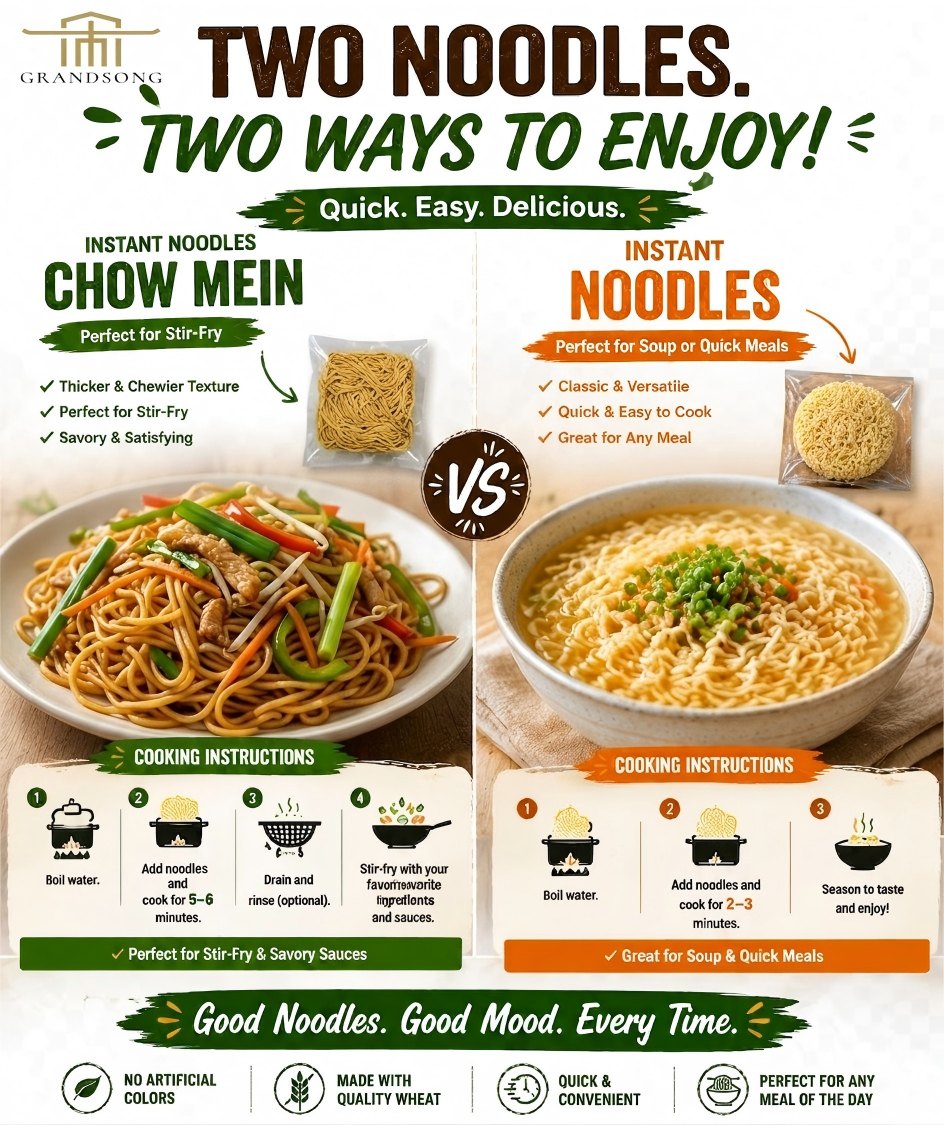
Fried Instant Noodles – The Classic Choice
Fried instant noodles are what most people picture when they think of instant noodles. After mixing, rolling, and steaming the dough, the noodles are quickly fried in oil — usually palm oil — to remove moisture fast. This gives them that familiar golden color, springy chew, and super-fast cooking time.
Why they’re popular:
They cook in just 2–3 minutes.
They have the chewy texture most consumers expect.
Long shelf life (often 6–12 months).
Lower production cost, which helps keep retail prices competitive.
The downsides:
Higher fat content because of the oil.
Increasingly seen as less healthy by wellness-focused shoppers.
Palm oil usage can raise questions about sustainability.
Even with these drawbacks, fried noodles still dominate in many markets, especially across Asia, Africa, and parts of South America, where affordability and familiarity win out.
Air-Dried Instant Noodles – The Modern Alternative
Air-dried noodles skip the frying step entirely. After steaming, they’re dehydrated using controlled hot air in drying tunnels or chambers. No oil is added, resulting in a cleaner, lower-fat product.
Key advantages:
Much lower fat content.
Shorter, cleaner ingredient lists — great for “clean label” marketing.
More natural wheat flavor and lighter color.
Easier to position as a premium or healthier option.
Trade-offs:
They usually take 4–6 minutes to cook.
Production costs are higher due to longer drying time and energy use.
In some markets, you may need to educate consumers about the difference.
Air-dried noodles are gaining strong traction in Europe, North America, and the Middle East, where health-conscious consumers are willing to pay more for better-for-you options.
How They Compare in Production and Nutrition
Fried noodles are fast and efficient but absorb oil. Air-dried noodles take more time and energy but avoid oil completely. Nutritionally, air-dried versions usually win on fat content and perceived cleanliness, while fried ones deliver the classic comfort-food experience.
From a business angle, fried noodles help you hit lower price points and appeal to mass markets. Air-dried noodles give you room to charge more and target premium or export channels.
What Should Your Brand Choose?
There’s no single “best” option — it depends on your goals:
Want maximum affordability and broad appeal? Go with fried.
Aiming for wellness, clean label, or premium positioning? Air-dried is probably smarter.
Trying to cover different segments? Offer both.
Sustainability also plays a role. Air-dried noodles avoid palm oil and can strengthen your ESG story, while fried noodles are more energy-efficient per unit during production.
Bottom line:The right choice comes down to understanding your target customers, pricing strategy, and where you want your brand to sit in the market. Some brands succeed by sticking to one format, while others grow faster by offering both.
At Xiamen GrandSong Noodles, we’ve helped many clients navigate this exact decision. Whether you need fried, air-dried, or a tailored mix of both, we provide full support — from recipe development and testing to packaging and global compliance.
Ready to move forward with your instant noodle project? Reach out today, and let’s find the format that best fits your brand’s vision and goals.
