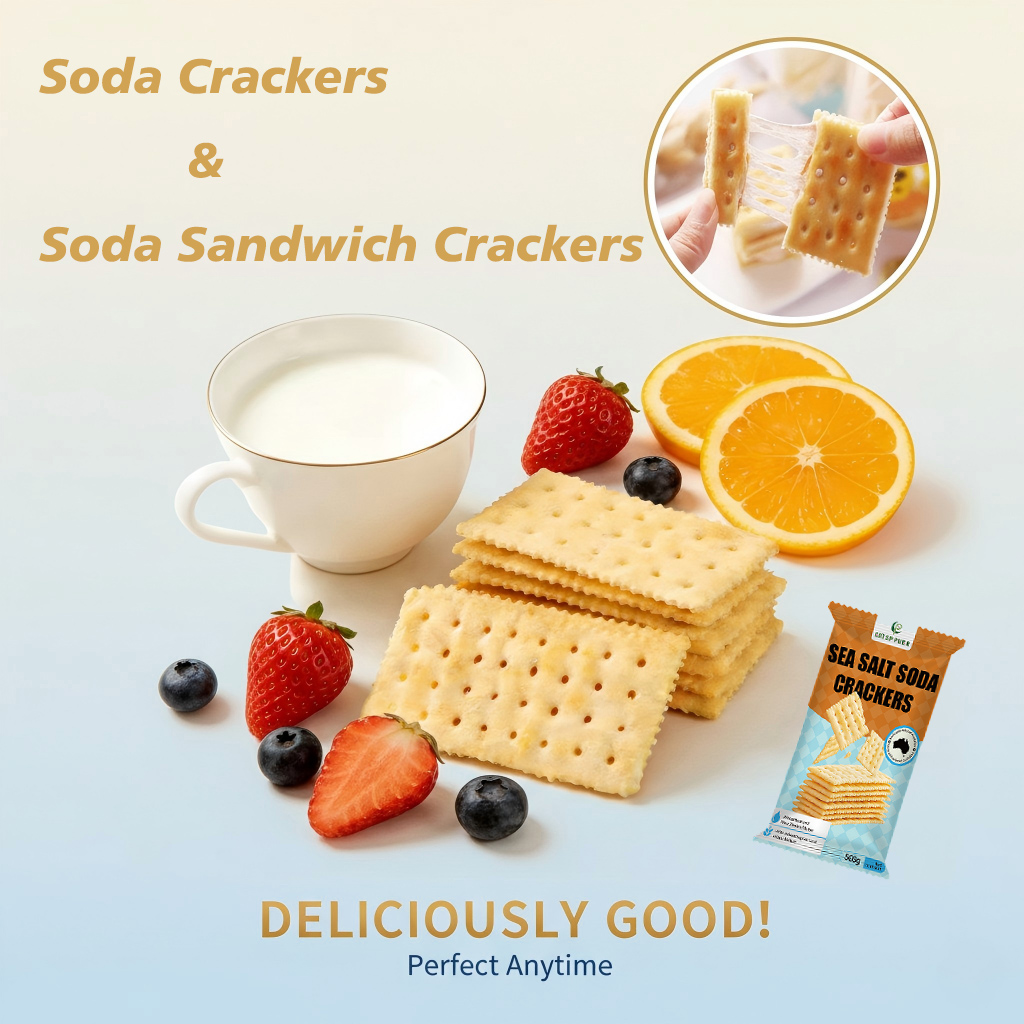

You have probably seen those thin, square crackers sitting next to the soup aisle or tucked in lunchboxes. Soda crackers—better known to many as saltines—are one of those pantry staples that have been around forever. They’re light, super crispy, and have just a hint of salt that makes them oddly addictive. The “soda” in their name comes from baking soda, which gives them that airy, brittle texture everyone loves.
What Makes Soda Crackers Special?
They’re pretty basic in looks: thin, usually square, and covered in tiny holes called docking holes. Those little punctures aren’t just for show—they let steam escape while baking so the crackers stay flat instead of puffing up like pillows.
In terms of texture, they’re dry and flaky with a satisfying snap when you bite into them. The crumb is loose and tender, thanks to a clever mix of yeast fermentation and baking soda that creates lots of tiny air pockets inside. Flavor-wise, they’re mild and neutral—not sweet at all, with just a light dusting of salt on top. Compared to richer crackers or biscuits, they keep the fat and sugar pretty minimal.
A Bit of History
These crackers didn’t just appear overnight. People were already making versions of them back in the 1830s, and you can even find early mentions in old American cookbooks like The Young House-keeper from 1838. The modern version we know today really took off in 1876 when a company in St. Joseph, Missouri started using baking soda to make ultra-thin, crisp crackers. They first called them “Premium Soda Crackers,” but later switched to “Saltines” because of that salty top and to highlight the baking soda. Eventually the brand joined Nabisco, and saltines became a household name. Today you’ll find them in kitchens all over the world—sometimes even labeled as “Export Soda” in certain countries.
How They’re Made
Most soda crackers are produced using something called the sponge-and-dough method. It starts with a “sponge”—a simple mix of flour, water, yeast, and sometimes a bit of fat—that’s left to ferment for many hours (often 18 or more). This step builds flavor and drops the pH a little.
Then they add more flour (usually a weaker one), baking soda, salt, and a small amount of shortening or oil. The dough gets gently mixed, folded into layers, rolled out super thin, poked with those signature holes, cut into squares, lightly salted on top, and baked quickly at high heat.
It’s this combination of long fermentation and the alkaline baking soda that gives soda crackers their signature lightness and crunch without loading them up with sugar or fat. The basic ingredients are straightforward: white wheat flour, water, yeast (in traditional recipes), baking soda, salt, and just a touch of oil or shortening.
How People Enjoy Them
Soda crackers are incredibly versatile. You can eat them straight out of the box as a simple snack—they pair perfectly with soup, chili, cheese, or dips. A lot of people also reach for them when they’re feeling queasy because they’re so gentle on the stomach.
Beyond snacking, they’re handy in the kitchen too. Crushed into crumbs, they make a great pie crust base, especially when mixed with butter and a bit of sugar. Southern cooks have long used them for old-fashioned soda cracker pie topped with meringue, or even in Atlantic Beach pie. You’ll also see them crumbled on top of casseroles or used as a coating for fried foods.
While the classic salted version is still king, you can now find flavored ones with herbs, cheese, or even sweet coatings like chocolate or nuts in some markets. There are also thicker, richer relatives like club crackers.
In the end, soda crackers have stuck around for a reason. They’re simple, portable, and deliver that perfect crunch with almost no fuss. Whether you’re having them with afternoon tea, packing them for a trip, or keeping a sleeve in the pantry for emergencies, they prove that sometimes the most basic ingredients make the most timeless snacks.