

In today's competitive marketplace, packaging has evolved far beyond its traditional role of simply protecting products. For B2B buyers, procurement managers, and brand owners, custom printed paper bags, bulk gift bags, and paper mailing bags represent strategic assets that directly influence brand perception, customer loyalty, and operational efficiency . As consumer demand for sustainable solutions rises and the unboxing experience becomes a critical brand touchpoint, selecting the right paper packaging partners and products requires careful evaluation of material quality, customization capabilities, supplier reliability, and total landed cost.
This comprehensive guide explores the key considerations for B2B buyers sourcing custom printed paper bags, gift bags in bulk, and paper mailing bags. Whether you are a retailer scaling seasonal promotions, an e-commerce brand seeking eco-friendly shipping solutions, or a corporate gift provider aiming for premium presentation, understanding the nuances of this packaging category will enable smarter procurement decisions and stronger supply chain partnerships.
The Strategic Importance of Custom Paper Packaging in B2B Markets
Brand Visibility and Customer Experience
Custom printed paper bags serve as mobile billboards for your brand, extending visibility far beyond the point of sale . When a customer walks out of a retail store or receives an e-commerce order, your packaging becomes a walking advertisement that potentially reaches hundreds of people. For B2B buyers, investing in quality paper packaging demonstrates attention to detail and commitment to brand consistency.
The unboxing experience has become particularly crucial for direct-to-consumer brands. A thoughtfully designed paper bag or mailer transforms a routine transaction into a memorable brand moment . Research indicates that B2B packaging buyers increasingly conduct online research before shortlisting suppliers, making the packaging itself an essential part of the marketing funnel . Custom printed paper bags with your logo, brand colors, and messaging create instant recognition while conveying professionalism and care.
Sustainability as a Competitive Differentiator
Environmental consciousness has moved from a niche concern to a mainstream expectation. Today's shoppers actively notice and reward sustainable choices . Customized paper bags made with recycled or responsibly sourced materials communicate your commitment to the planet and align with customer values .
For B2B buyers, sustainability claims must be backed by credible certifications. FSC (Forest Stewardship Council) certification verifies that paper products come from responsibly managed forests . Brands targeting eco-conscious markets should verify material certifications and avoid vague "eco-friendly" claims without supporting documentation . Paper mailing bags, in particular, offer a recyclable alternative to traditional polythene mailers, making them an attractive choice for brands seeking to reduce their environmental footprint .
Custom Printed Paper Bags: Design, Materials, and Functionality
Key Features and Customization Options
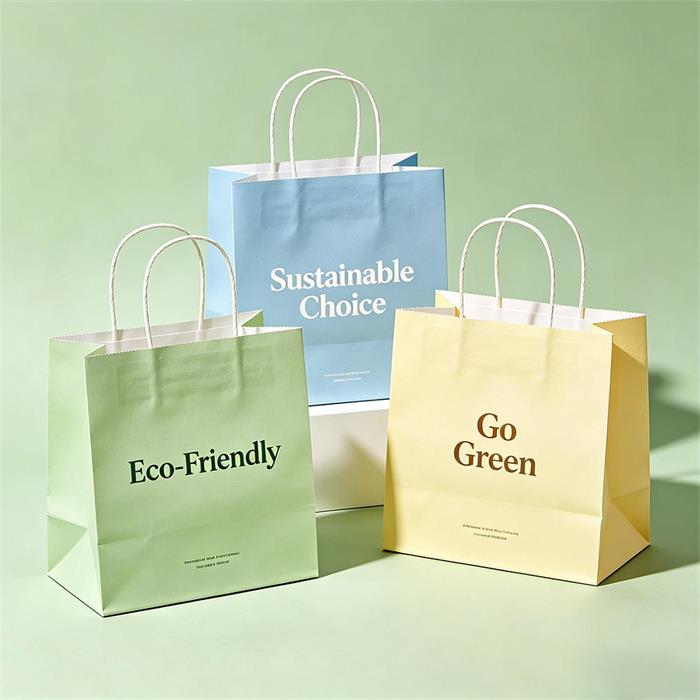
Custom printed paper bags offer extensive design flexibility, allowing brands to craft packaging that perfectly aligns with their identity . From bold logos to subtle patterns, the options range from simple one-color printing to complex full-color designs. B2B buyers should evaluate suppliers based on their printing capabilities, including offset, flexo, and digital printing technologies.
Design flexibility extends to bag structure as well. Options include twisted-handle paper bags, drawstring bags, flat bags, and gusseted designs that expand to accommodate larger items . The choice of handle type significantly impacts both functionality and perceived quality. Ribbon handles suggest luxury, while twisted kraft handles convey a more natural, eco-friendly aesthetic.
Material Selection and Durability
The durability of custom printed paper bags depends on the paper weight, measured in grams per square meter (GSM). Higher GSM ratings indicate thicker, stronger paper suitable for heavier items . For retail applications, standard kraft paper typically ranges from 80–150 GSM, while premium gift bags may use heavier stock . B2B buyers must balance durability requirements against cost considerations and sustainability goals.
Kraft paper remains the most popular choice for custom printed paper bags due to its natural appearance, strength, and recyclability . White kraft offers a cleaner canvas for vibrant brand colors, while brown kraft conveys a more organic, eco-conscious image. For brands requiring enhanced moisture resistance, laminated or coated options are available, though these may compromise recyclability .
Gift Bags Bulk: Sourcing Strategies for B2B Buyers
Understanding the Bulk Gift Bag Market
The gift bag market caters to diverse applications, including retail, corporate gifting, events, and promotional campaigns . China remains the world's leading manufacturing hub for gift bags, offering unmatched economies of scale, manufacturing density, and export infrastructure . Industrial clusters in Zhejiang, Guangdong, and Sichuan provinces provide specialized ecosystems supporting end-to-end production from raw material sourcing to international logistics .
For B2B buyers sourcing gift bags in bulk, understanding regional specialization helps identify the right manufacturing partners. Zhengzhou has emerged as a center for high-volume paper bag manufacturing, while Yiwu functions as a global export marketplace with strong customization support . Zhejiang suppliers benefit from proximity to major ports like Shanghai and Ningbo, reducing inland freight costs and transit times .
Evaluating Supplier Capabilities Beyond Price
Selecting the right supplier involves balancing multiple factors beyond per-unit cost . Experienced procurement managers evaluate production capacity, customization flexibility, operational reliability, and compliance standards.
Key performance indicators to assess include:
On-time delivery rate: Above 90% is considered reliable; rates near 100% suggest disciplined production planning
Response time: Under 6 hours indicates proactive customer service
Reorder rate: A rate above 25% reflects customer satisfaction and product consistency
Quality control processes: Pre-shipment inspections and batch sampling are essential
Material Options and Price Segmentation
Bulk gift bags are available in a wide range of materials, with pricing reflecting quality levels :
| Material Type | Typical Price Range (USD/unit) | Best For |
|---|---|---|
| Lightweight kraft/non-woven | $0.01–$0.15 | Promotional giveaways, short-term use |
| Standard kraft/recycled paper | $0.10–$0.45 | Mid-tier retail applications |
| Premium laminated/cotton/jute | $0.60–$1.50 | Luxury brands, reusable packaging strategies |
Budget-focused buyers may favor economy-grade options for giveaways, while luxury brands often choose higher-priced options for premium tactile finishes . For B2B buyers, lower per-unit costs often come with trade-offs in material thickness, print clarity, or after-sales service.
Paper Mailing Bags: Sustainable Shipping Solutions for E-commerce
The Rise of Paper Mailers in E-commerce Logistics
Paper mailing bags have emerged as a compelling alternative to traditional polythene mailers, addressing growing consumer demand for sustainable packaging . These kraft paper shipping solutions offer e-commerce brands a way to reduce plastic usage while maintaining a professional, branded customer experience.
Paper mailing bags are particularly well-suited for light-to-mid-weight items including apparel, small accessories, stationery, books, and cosmetics in secondary cartons . They provide a premium unboxing look while remaining lightweight for cost-effective shipping . For B2B buyers managing fulfillment operations, paper mailers streamline packing processes through self-seal closures that eliminate the need for tape or heat sealing .
Customization and Performance Features
Custom paper mailing bags can be tailored to fit specific product dimensions, branding requirements, and shipping workflows . Key customization options include:
Size: Standard dimensions or bespoke sizes for orders over 5,000–10,000 units
Closure: Self-seal adhesive strips, peel-and-seal, tear strips for easy opening, return seals
Reinforcement: Gusseted designs for expanded capacity, reinforced seams for added strength
Supplier quality control is crucial for paper mailing bags, as inconsistent glue sealing can lead to parcel damage and negative reviews . B2B buyers should work with suppliers offering clear specifications, fast sampling, and production capacity that scales with demand .
Material Considerations and Durability
Paper mailing bags are typically made from 100% recyclable kraft paper , with FSC-certified options available . While paper is more prone to tears or water damage than polythene, coatings and inner barriers can improve moisture resistance for certain shipping routes . B2B buyers should evaluate the trade-offs between sustainability benefits and durability requirements based on their product types and shipping conditions.
Minimum order quantities for custom paper mailing bags typically start at 200–250 units, with bespoke sizes available for larger orders . Delivery times range from 2–6 weeks depending on order complexity . Some suppliers offer stockholding and logistics management, allowing buyers to benefit from volume pricing while storing and dispatching bags as required .
Supplier Selection and Quality Assurance
Building a Structured Evaluation Framework
Effective B2B sourcing for custom printed paper bags, gift bags, and paper mailing bags requires a structured approach to supplier evaluation . Procurement managers should implement a multi-stage verification process:
Define requirements clearly: Dimensions, material type, print specifications, sustainability criteria, and intended use
Shortlist 3–5 suppliers: Using reliability metrics and portfolio alignment
Request physical samples: Test seam strength, handle durability, print clarity, and material thickness
Conduct virtual audits: Observe warehouse conditions, quality control checkpoints
Start with trial orders: Assess real-world performance before scaling up
Certifications and compliance standards provide additional verification. ISO 9001 indicates standardized quality management, while BSCI or SMETA audits confirm social compliance . For sustainable sourcing, FSC certification validates responsible forestry practices .
Risk Mitigation and Payment Protection
To minimize supply chain risks, B2B buyers should implement protective measures:
Use secure payment methods such as Trade Assurance for initial transactions
Avoid full prepayments; opt for 30% deposit with balance due pre-shipment
Confirm lead times in writing, including buffer days for delays
Building long-term relationships with reliable suppliers benefits both parties. Communicating anticipated recurring orders can lead to favorable terms, including reduced MOQs or free sample revisions . B2B buyers should view suppliers as strategic partners rather than transactional vendors .
Frequently Asked Questions
Q: What are the typical minimum order quantities for custom printed paper bags?
Minimum order quantities vary by product type and customization level. For standard custom printed paper bags and gift bags, MOQs typically start at 100–500 pieces . For paper mailing bags, MOQs often start at 200–250 units . Premium customizations requiring new dies or multi-color printing may require 500+ units to justify setup costs . Many suppliers offer low-MOQ sampling before committing to full production runs .
Q: How do I ensure supplier reliability when sourcing from overseas?
Evaluate suppliers using performance metrics including on-time delivery rate (aim for ≥90%), response time (under 6 hours indicates proactive service), and reorder rate (above 20% suggests customer satisfaction) . Request physical samples, conduct video audits, and start with trial orders. Use platform-backed payment protection like Trade Assurance for initial transactions .
Q: Are paper mailing bags as durable as polythene mailers?
Paper mailing bags are robust and can withstand typical shipping challenges, though they are more prone to tears or water damage than polythene . For optimal protection, choose suppliers offering reinforced seams, wet-strength treatment, or poly coatings. Paper mailers are best suited for light-to-mid-weight items such as apparel, accessories, and books .
Q: What sustainability certifications should I look for?
Key certifications include FSC (Forest Stewardship Council) for responsible forestry, ISO 9001 for quality management, and BSCI or SMETA for social compliance . For brands targeting EU markets, REACH compliance for dyes and coatings is essential . Avoid suppliers making vague "eco-friendly" claims without supporting documentation .
Q: How long does production and shipping typically take?
Production typically takes 7–25 days after design approval, depending on order complexity and volume . Sea freight adds 18–35 days for container shipments . Air freight delivers in 5–8 days but costs significantly more . Plan inventory cycles accordingly, especially for time-bound events like holidays or product launches .
Q: Can I get custom designs with low minimums?
Yes, several suppliers accommodate customization starting at 100 units . Digital printing allows for flexible design changes without expensive setup fees . However, expect longer lead times and slightly higher unit costs compared to standard stock items .
Conclusion
Custom printed paper bags, gift bags in bulk, and paper mailing bags have become essential components of modern B2B packaging strategies. The global manufacturing landscape offers diverse sourcing options, with China's industrial clusters providing unparalleled economies of scale and customization capabilities . However, selecting the right partners demands rigorous evaluation beyond price comparisons. Performance metrics, certification verification, sample testing, and trial orders are essential risk mitigation practices. By implementing strategic sourcing practices, B2B buyers can turn packaging from a commodity expense into a competitive advantage that drives brand recognition, customer loyalty, and sustainable growth.
